

The Mediterranean diet is one of the most popular and healthiest ways to eat. It focuses on fresh vegetables, seasonal fruits, whole grains, legumes, fish, and heart-healthy fats like olive oil and nuts. Research shows this way of eating can improve heart health, help with weight management, and reduce inflammation.
Our free printable Mediterranean diet food list highlights over 100 delicious ingredients that people enjoy across the region and will give you plenty of ideas for meal planning, shopping, and cooking at home. Scroll down to get our free Mediterranean diet food list printable PDF!
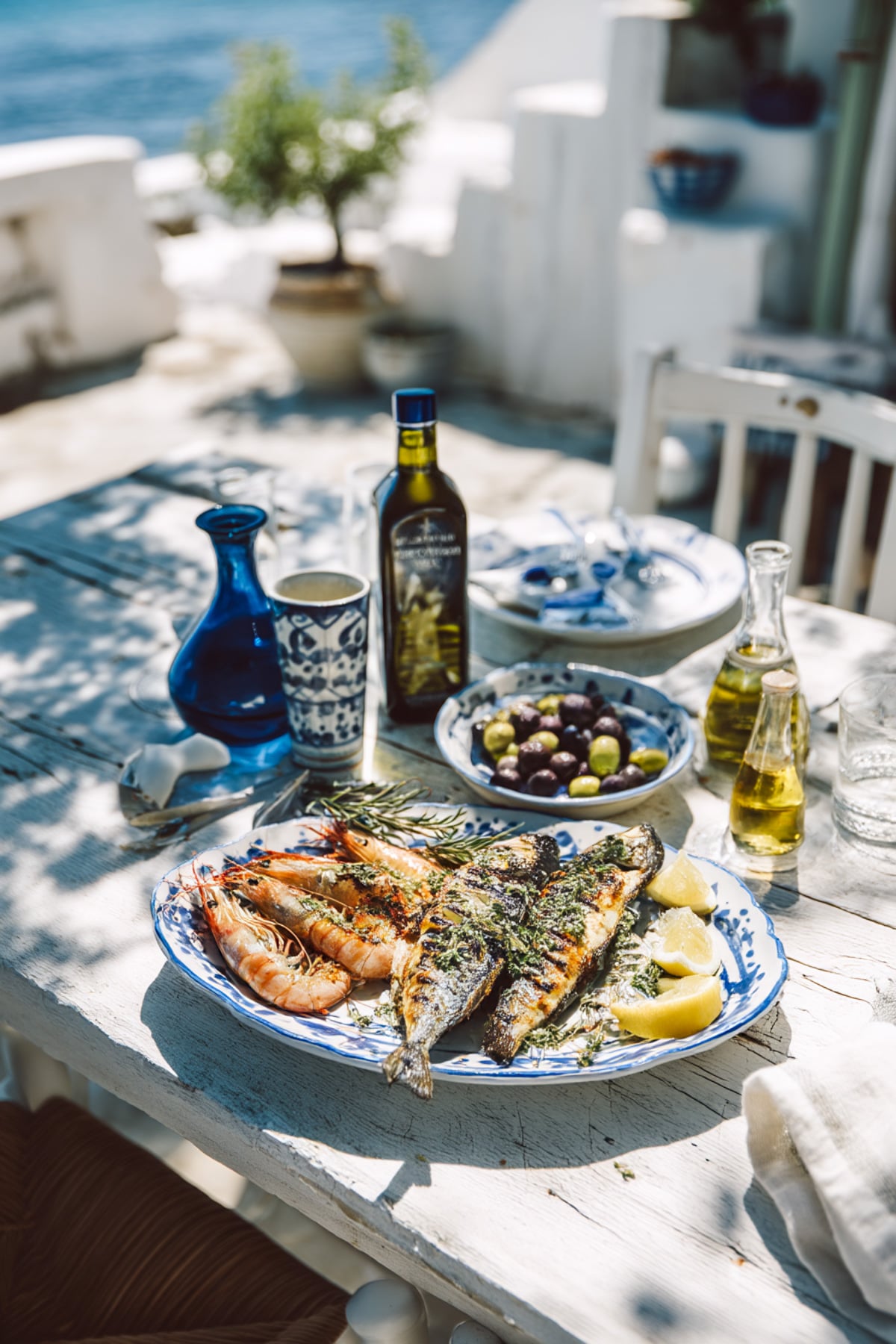
I've been lucky to spend time in southern Italy, southern France, Spain, Turkey, Morocco, and Greece, and each country has its own spin on Mediterranean cooking.
Some dishes are light and fresh, others are warm and full of spice, but they all focus on simple ingredients, vibrant flavors, and locally sourced foods.
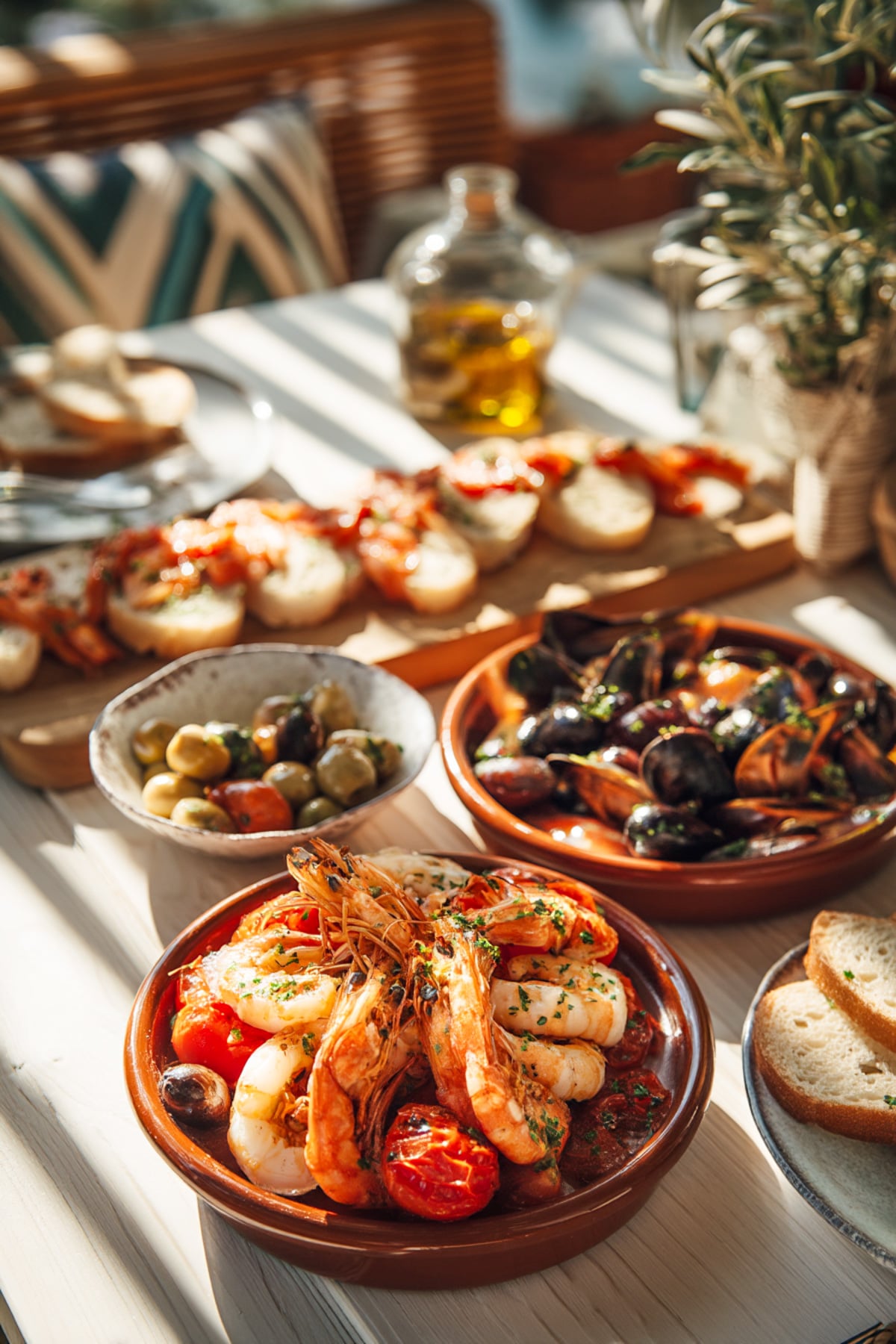
We're sharing a look at the foods and traditions from each region, along with practical tips on how you can use them in your own kitchen.
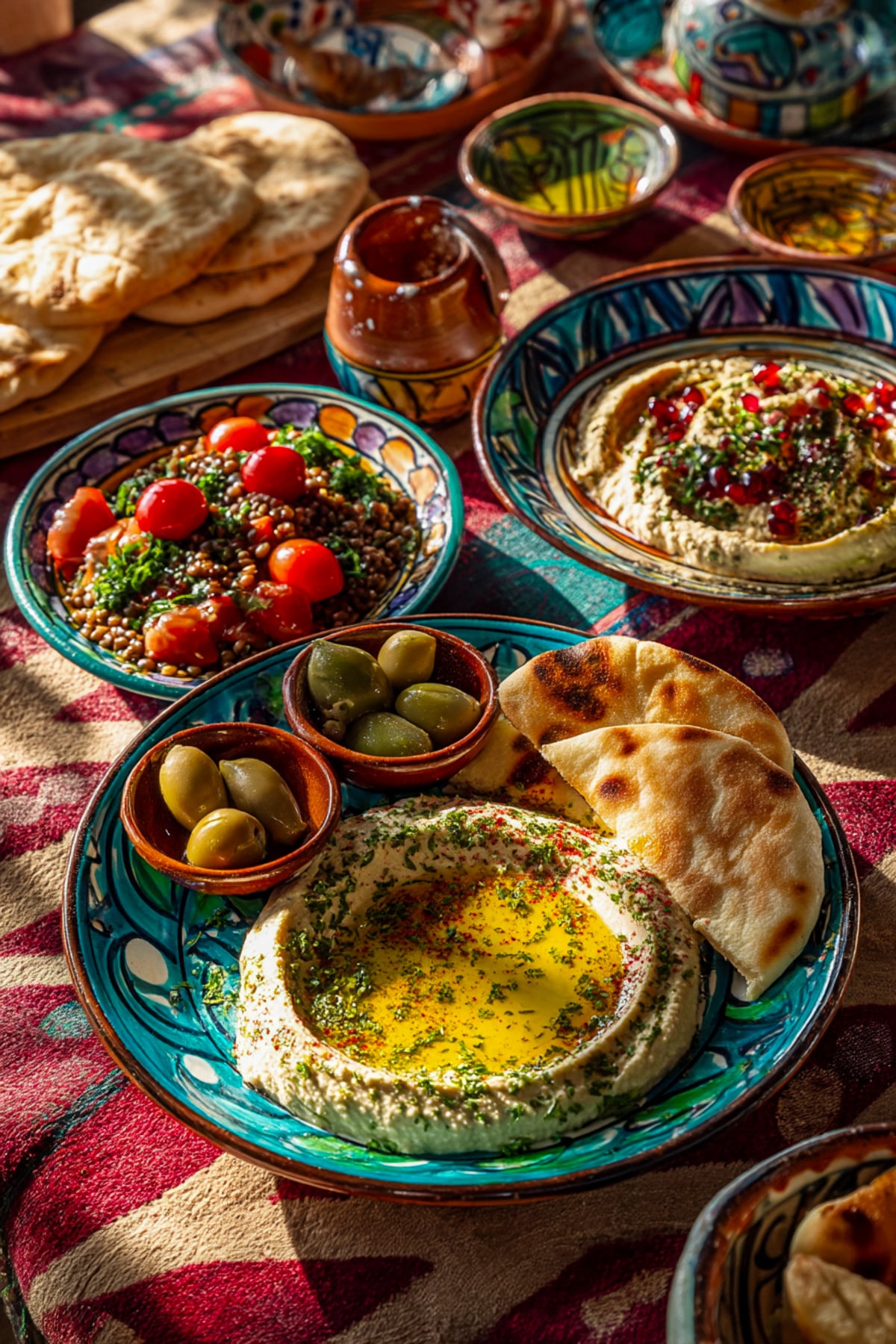
Mediterranean Countries and Their Foods
The Mediterranean diet spans many countries, each with its own flavors and traditions. Here's a quick look at what different regions are best known for:
- Greece: Famous for fresh salads, olives, feta, yogurt, chickpeas, lentils, and seafood. Meals often include mezze like hummus, tzatziki, and grilled vegetables.
- Italy (especially the south): Known for tomatoes, pasta, olive oil, basil, oregano, garlic, parmesan, and seafood like anchovies, clams, and mussels.
- France (southern Provence region): Highlights ratatouille vegetables (zucchini, eggplant, peppers), herbs de Provence, olives, goat cheese, and rustic breads.
- Spain: Tapas culture with olives, garlic, saffron, rice for paella, almonds, oranges, and seafood like sardines and mussels.
- Turkey: A blend of Mediterranean and Middle Eastern flavors with chickpeas, lentils, eggplant, lamb, yogurt sauces, and herbs like mint and sumac.
- Morocco: Famous for couscous, tagines with chickpeas, lentils, preserved lemons, saffron, cumin, and dried fruits like dates and apricots.
- Egypt: Known for ful medames (stewed fava beans), lentil soups, flatbreads, chickpeas, garlic, onions, and herbs like parsley and coriander.
- Lebanon and the Eastern Mediterranean: Fresh herbs, bulgur wheat, tabbouleh, hummus, baba ghanoush, and flatbreads are staples.
- Israel: Popular for fresh salads, chickpeas, tahini, olives, pita bread, and dairy like labneh.
- Other North African regions (Tunisia, Algeria, Libya): Couscous, harissa chili paste, seafood, legumes, and plenty of olive oil.
Get our free pdf printable as a thank you for joining our healthy recipes email list!
100+ Mediterranean Foods to Add to Your Kitchen
This Mediterranean food list is organized by category so you can easily plan meals and build a healthy grocery list. These ingredients are the foundation of Mediterranean cooking across the region.
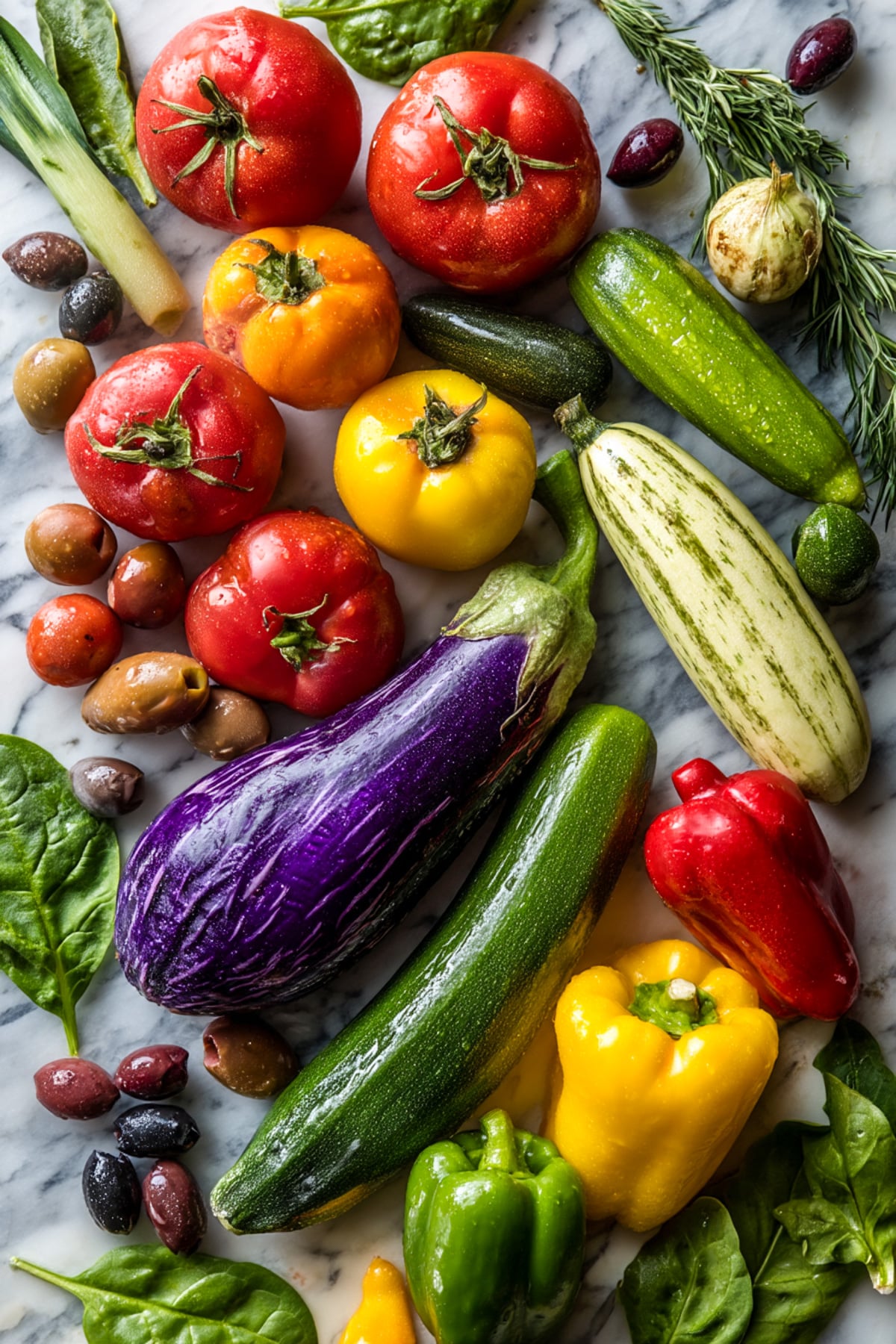
Vegetables
Vegetables are at the heart of the Mediterranean diet, eaten daily in salads, soups, and roasted side dishes. Fresh, seasonal produce adds both flavor and nutrition, with olive oil and herbs used to bring everything together.
- Eggplant
- Zucchini
- Tomatoes
- Cucumbers
- Bell peppers
- Artichokes
- Fennel
- Spinach
- Arugula
- Romaine lettuce
- Swiss chard
- Kale
- Broccoli rabe
- Green beans
- Olives (Kalamata, green, etc.)
- Onions
- Garlic
- Mushrooms
- Beets
- Carrots
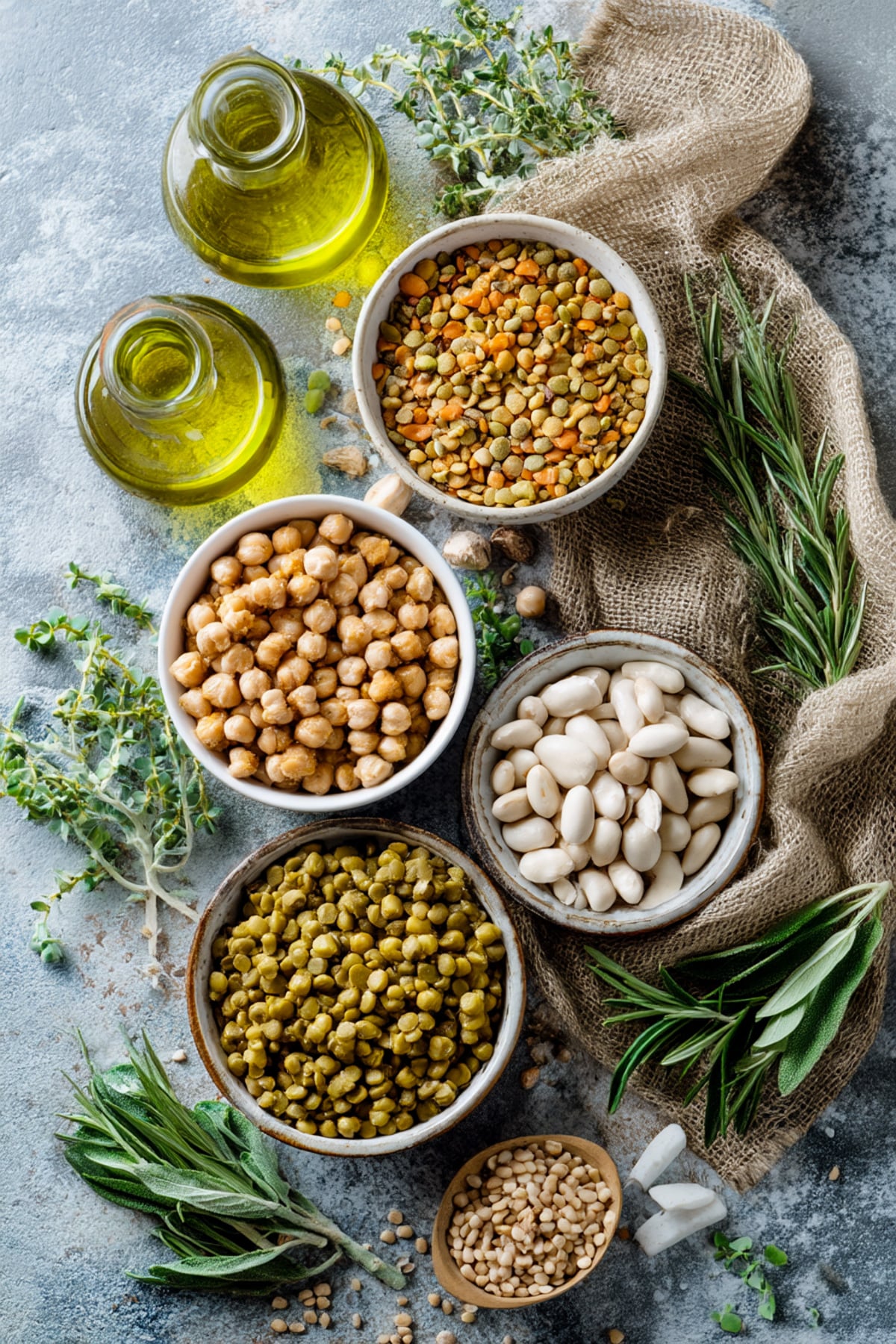
Legumes and Pulses
Beans and lentils are an affordable, protein-rich staple across the Mediterranean. They're used in soups, stews, dips like hummus, and hearty salads that make healthy eating simple and satisfying.
- Chickpeas
- Lentils (red, green, brown)
- White beans (cannellini)
- Fava beans
- Split peas
- Green peas
- Lupini beans
- Borlotti beans (cranberry beans)
- Gigantes beans (Greek giant beans)
- Butter beans
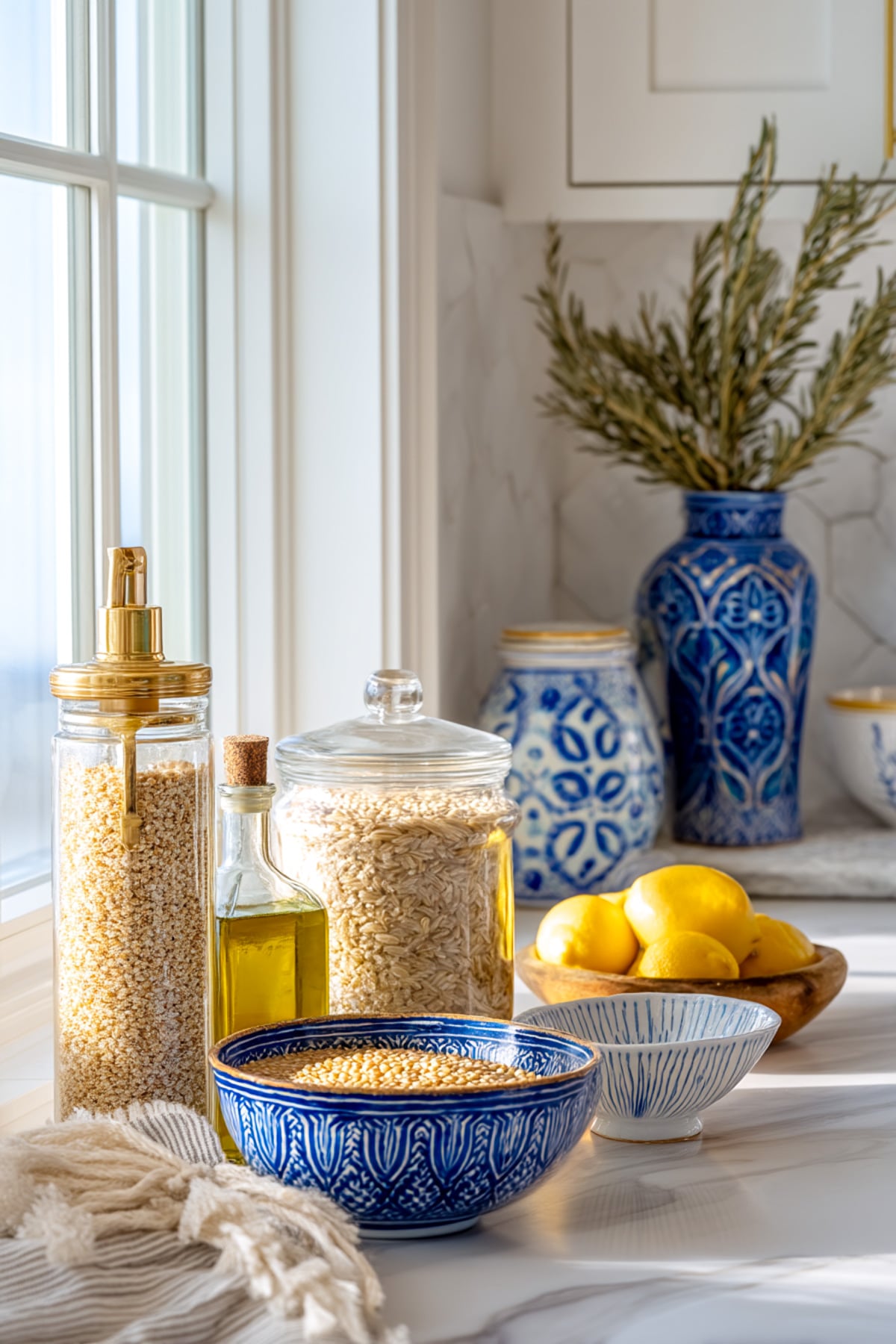
Whole Grains and Breads
Whole grains and traditional breads provide energy and balance to Mediterranean meals. From pita and couscous to farro and bulgur, these grains are often paired with vegetables, legumes, and olive oil.
- Bulgur
- Couscous
- Farro
- Barley
- Freekeh
- Polenta
- Brown rice
- Arborio rice (risotto)
- Bomba rice (paella)
- Orzo
- Whole wheat pita
- Lavash bread
- Sourdough bread
- Multigrain bread
- Semolina pasta
- Whole wheat pasta
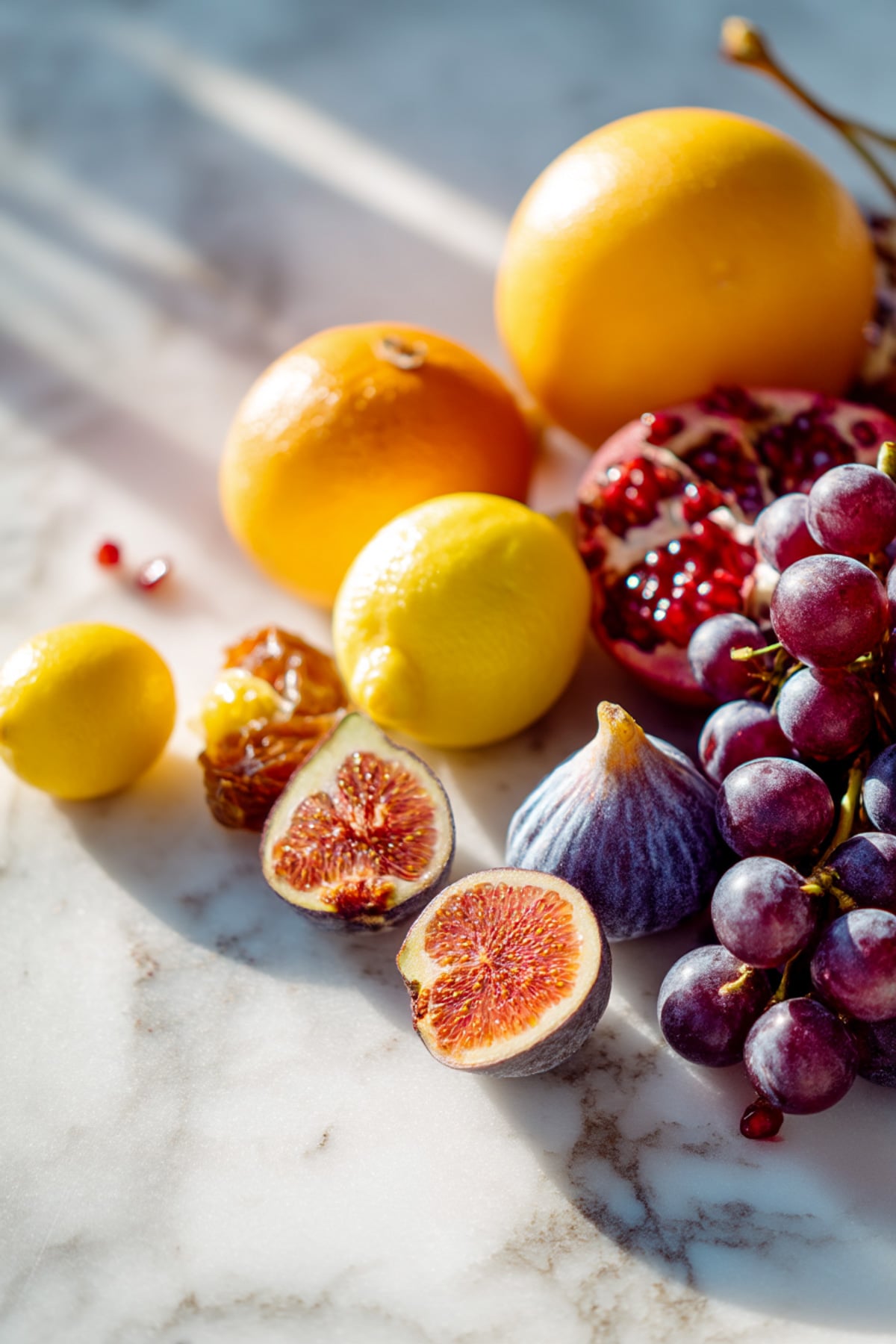
Fruits
Fresh fruit is enjoyed daily in Mediterranean countries, often served at the end of a meal instead of dessert. Citrus, stone fruits, and melons bring natural sweetness, while dried fruits like dates and figs add quick energy.
- Grapes
- Figs
- Dates
- Pomegranates
- Oranges
- Blood oranges
- Lemons
- Mandarins
- Peaches
- Apricots
- Cherries
- Apples
- Pears
- Plums
- Melons (cantaloupe, honeydew, watermelon)
- Citron
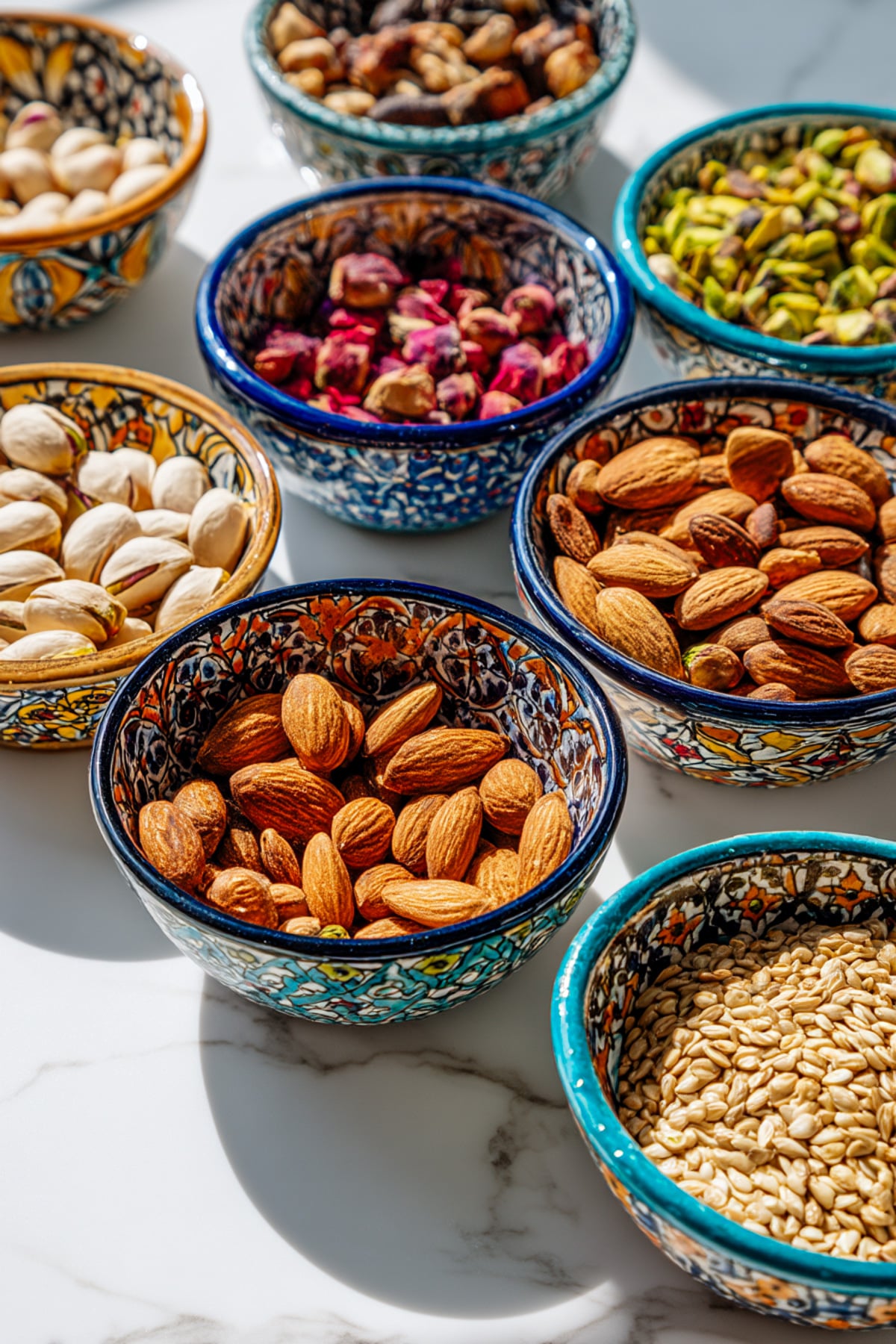
Nuts and Seeds
Nuts and seeds are small but powerful sources of healthy fats, protein, and fiber. They're sprinkled on salads, blended into dips, or eaten as snacks to keep meals balanced and satisfying.
- Almonds
- Walnuts
- Pistachios
- Pine nuts
- Hazelnuts
- Sunflower seeds
- Sesame seeds
- Pumpkin seeds (pepitas)
- Flaxseeds
- Chia seeds
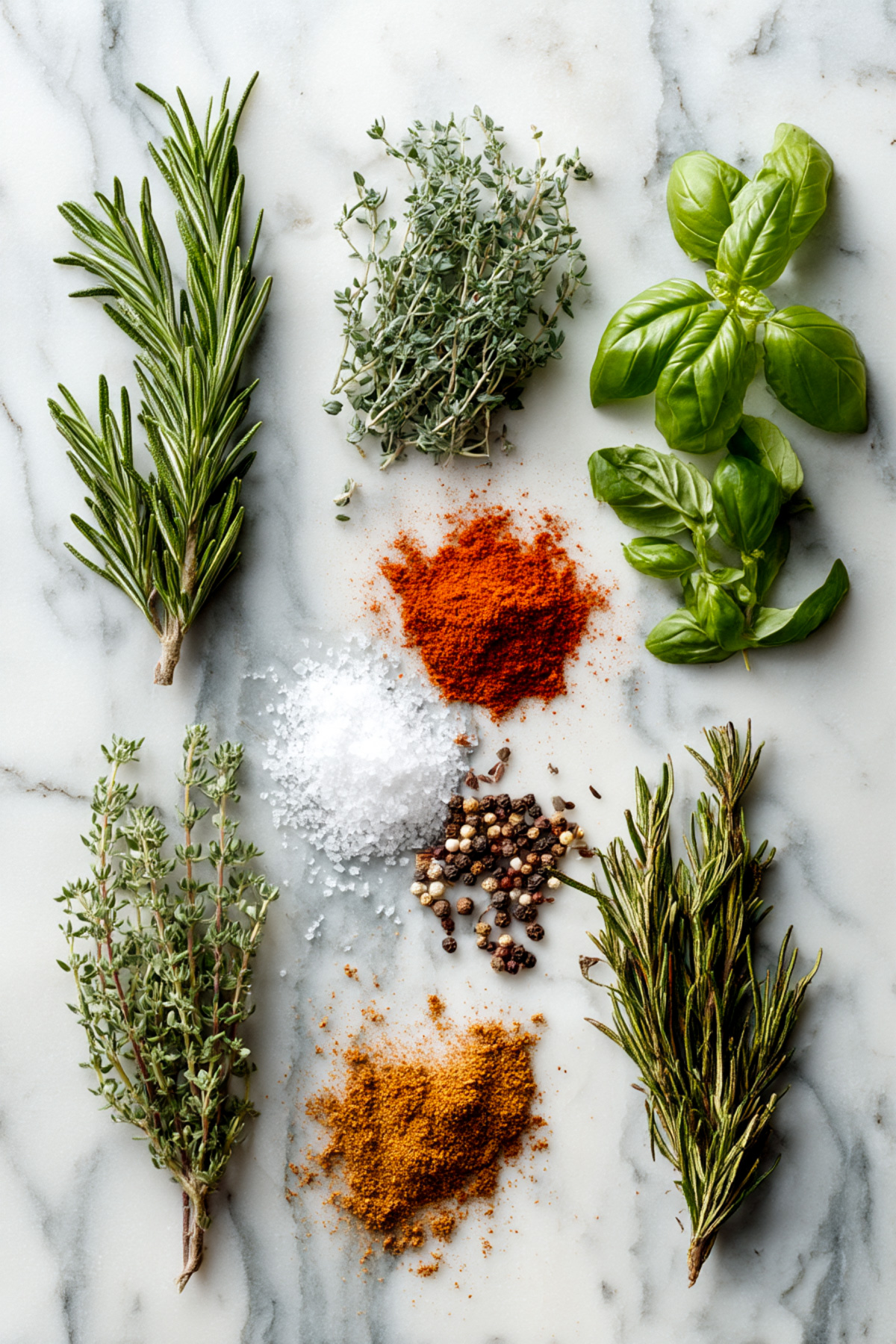
Herbs and Spices
Herbs and spices give Mediterranean food its bold, memorable flavor without relying on heavy sauces. Fresh herbs like parsley and mint brighten salads, while spices such as cumin, saffron, and sumac add depth to stews and tagines.
- Basil
- Oregano
- Rosemary
- Thyme
- Mint
- Parsley
- Dill
- Cilantro
- Coriander
- Cumin
- Saffron
- Cinnamon
- Paprika
- Za'atar spice blend
- Sumac
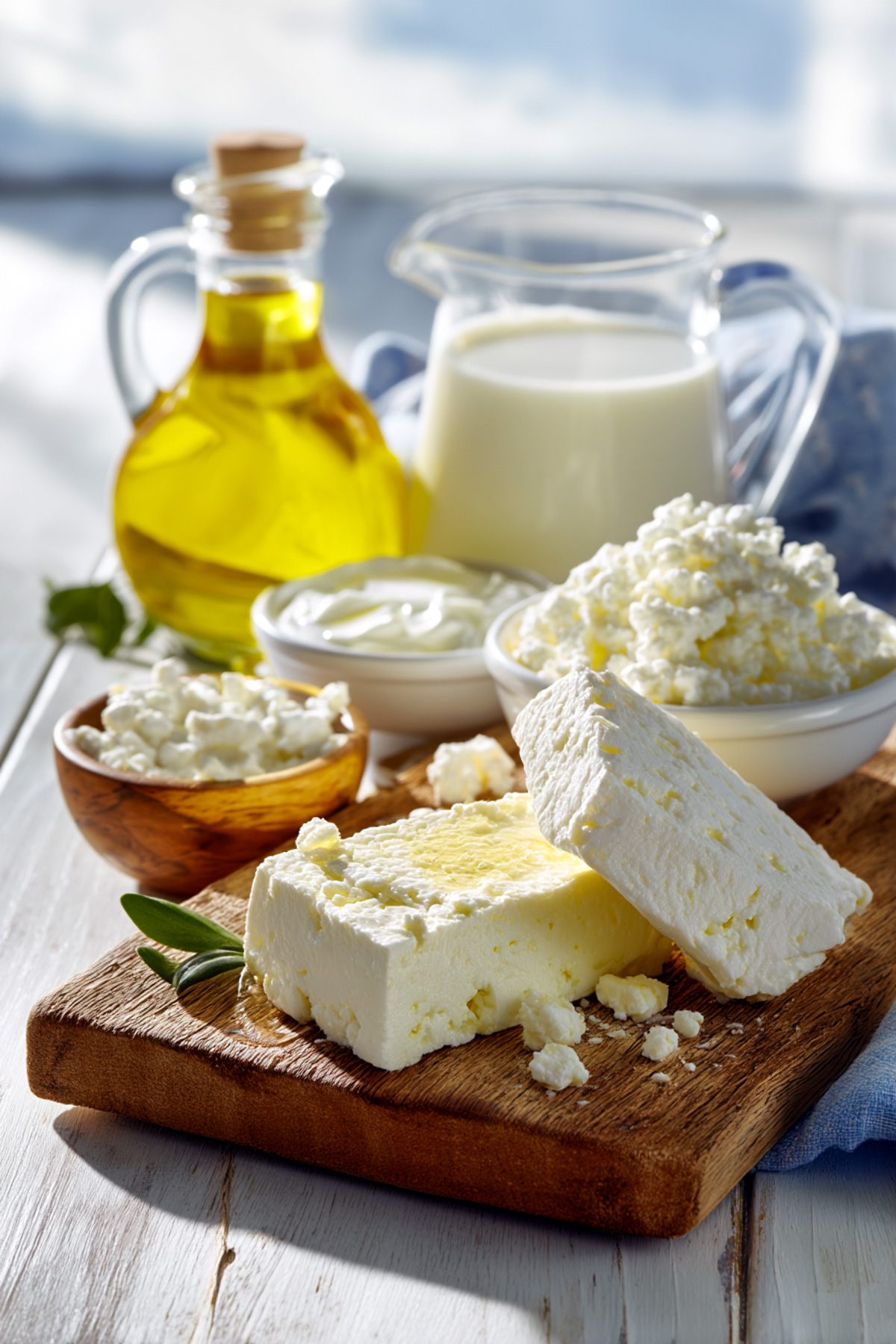
Cheese and Dairy
Cheese and yogurt are used in moderation but add rich flavor and creaminess to Mediterranean meals. Favorites like feta, halloumi, and labneh are often paired with vegetables, breads, or grilled meats.
- Feta
- Halloumi
- Ricotta
- Parmigiano-Reggiano
- Pecorino Romano
- Greek yogurt
- Mascarpone
- Labneh (strained yogurt)
- Mozzarella
- Ricotta salata
- Manouri cheese
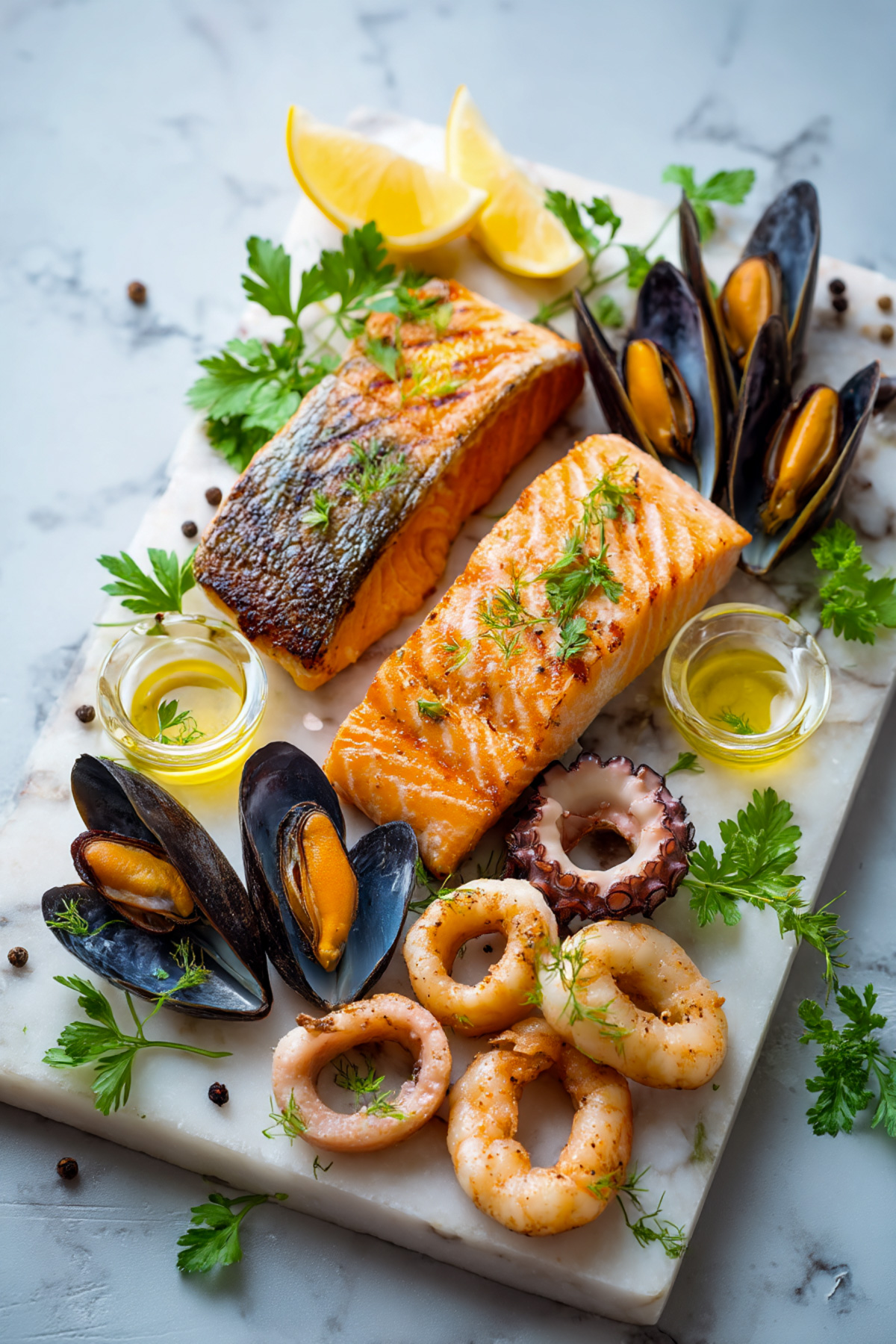
Seafood and Fish
Fish and seafood are eaten several times a week in the Mediterranean diet, especially in coastal areas. Rich in omega-3s, options like sardines, anchovies, and mackerel are staples, along with tuna, seabass, seabream, mussels, and octopus.
- Sardines
- Anchovies
- Mackerel
- Tuna
- European seabass (branzino)
- Gilthead seabream (dorade)
- Mussels (Mediterranean mussel)
- Octopus
- Squid
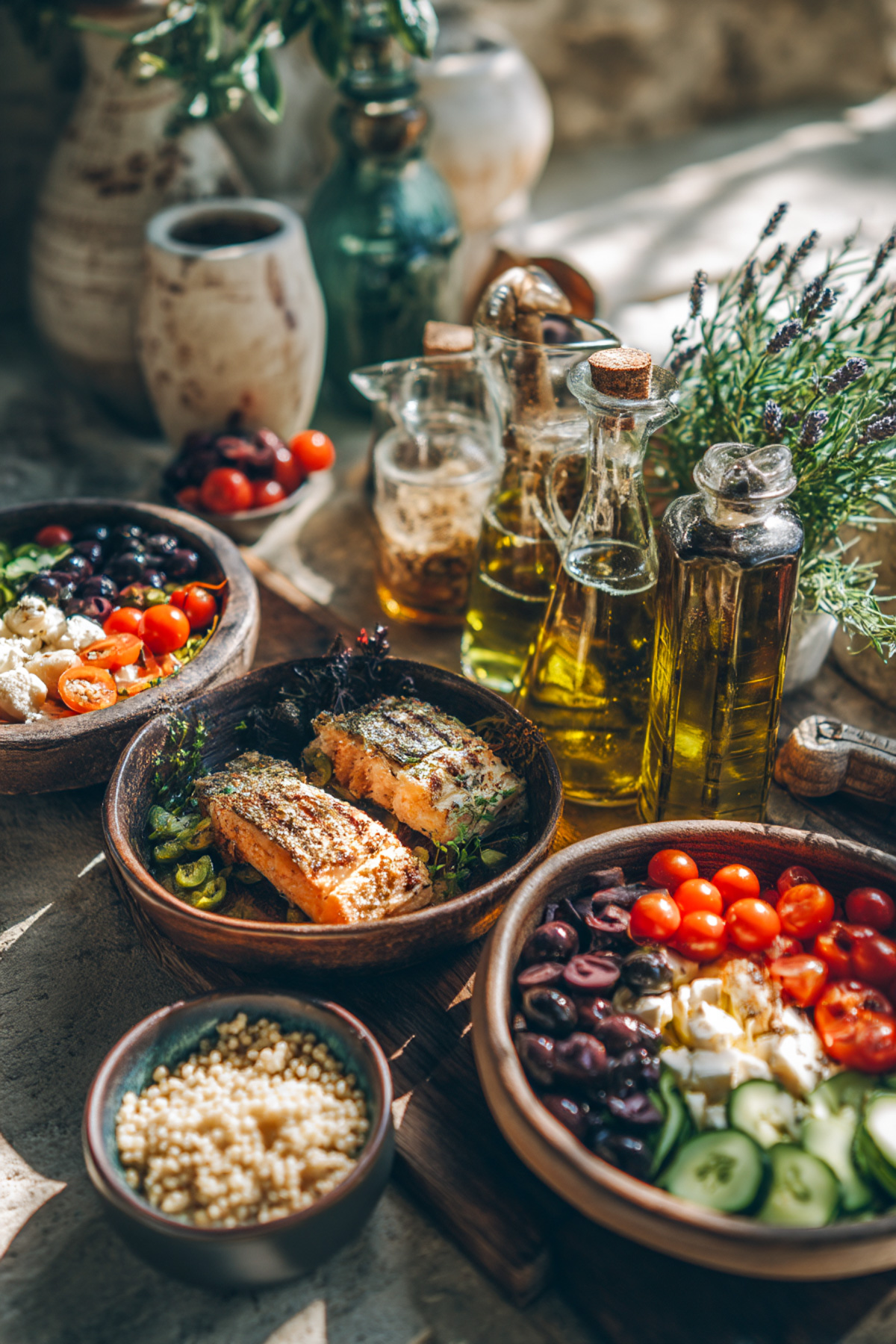
Other Mediterranean Protein Foods
While seafood is a cornerstone of the Mediterranean diet, it's not the only protein people eat.
Poultry, eggs, and cheeses are eaten in moderation, and lamb or goat appears in many traditional dishes, especially in Greece, Turkey, and North Africa.
These proteins are usually served in smaller portions compared to vegetables, grains, and beans and not eaten as often.
- Chicken
- Turkey
- Lamb
- Goat
- Eggs
More Free Mediterranean Resources
- 25 Mediterranean Snack Recipes
- 25 Mediterranean Breakfast Recipes
- 30 Low Carb Mediterranean Recipes
- 25 Blue Zones Diet Recipes
- 100 Easy Mediterranean Recipes for Beginners
- Mediterranean Diet Grocery List
If you loved our recipe, please leave us a ⭐⭐⭐⭐⭐ review and leave us a comment too! Connect with us on Pinterest, Facebook, Instagram, TikTok, or YouTube!

Marty Heaxt says
Gosh, what a wonderful list! Thank you. I am 80 years old; responsible for my diet; and now have small problem with weight and cholesterol. I love to eat; have traveled to 65 countries (Italy 10 times); never met a country's food that I don't like; avoid fast food and have little respect for the cleanliness of American restaurants. Take charge.