

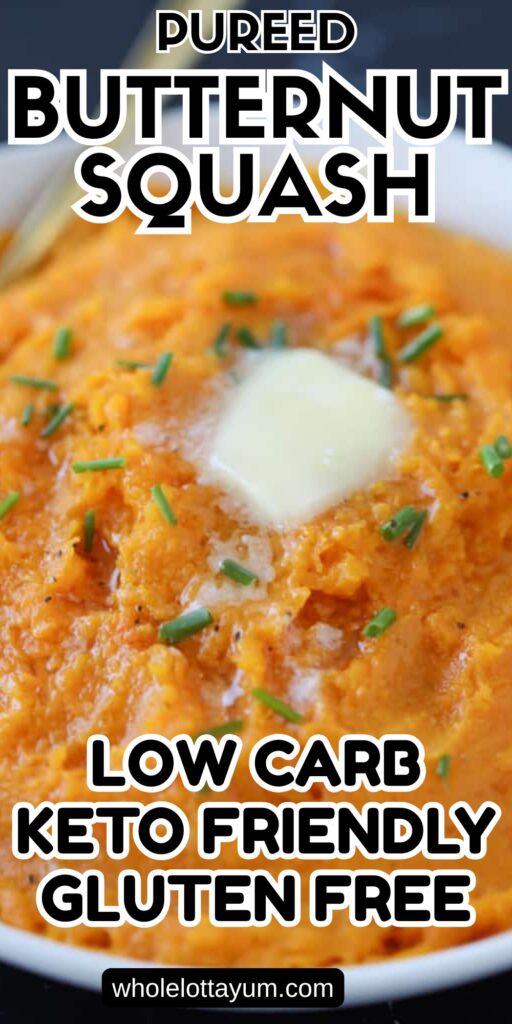
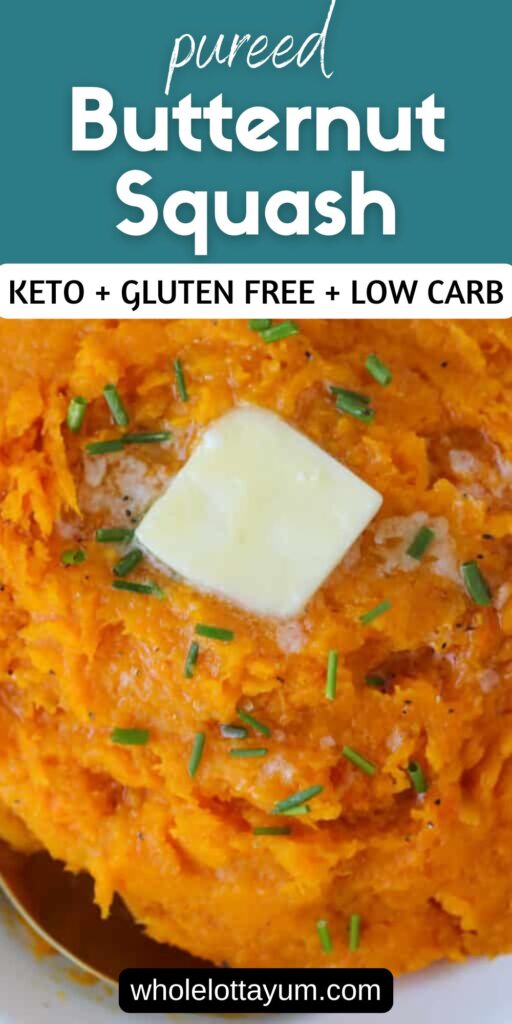
This easy mashed butternut squash is a creamy, savory side made with roasted squash, butter, and a splash of milk. It's my favorite fall or holiday side when I want something lighter and lower carb than traditional mashed potatoes.

There's something in the fall air that just makes squash craveworthy. I usually make mashed butternut squash for the holidays (when I'm not making cauliflower mashed potatoes) and low carb butternut squash soup on chilly weekends. For quick and simple dinners I often go to air fryer butternut squash, baked squash halves , or roasted squash with Brussel sprouts.
Things to Know About Mashed Butternut Squash
- Roasting the squash first brings out its natural sweetness and nutty flavor.
- Bake the squash until it is very fork-tender so it mashes easily without lumps.
- A hand mixer gives you a smoother texture, while a potato masher creates a more rustic mash.
- Butternut squash is higher in carbohydrates than vegetables like cauliflower or radishes, but it can be a lower-carb alternative to traditional mashed potatoes depending on your portion size.
- You can keep it savory or add cinnamon and a little sweetener for a sweeter variation.
Squash Cutting Made Easy!
Microwave the whole squash for 2-3 minutes before cutting if needed. This can slightly soften the exterior and make a hard squash easier to slice.
Ingredients You'll Need
See the recipe card below for the exact quantities.
- Butternut squash: The base of the recipe. Roast it until very soft so the flesh scoops easily from the skin and mashes smoothly.
- Butter: Adds richness and helps create a creamy texture. I use some before roasting and mix the rest into the cooked squash. Feel free to swap this for olive oil.
- Milk of choice: Loosens the mash without making it overly rich. Add it gradually so you can control the consistency. I used almond milk but any dairy or plant based beverage works well.
- Salt and black pepper
How to Make Mashed Butternut Squash
Step 1: Prep the squash
Preheat the oven to 350°F.
Wash the butternut squash and carefully cut it in half lengthwise. Scoop out the seeds and stringy membrane.
Place the halves cut side up on a rimmed baking sheet. Brush with melted butter and season with salt and pepper.
Step 2: Roast until very tender
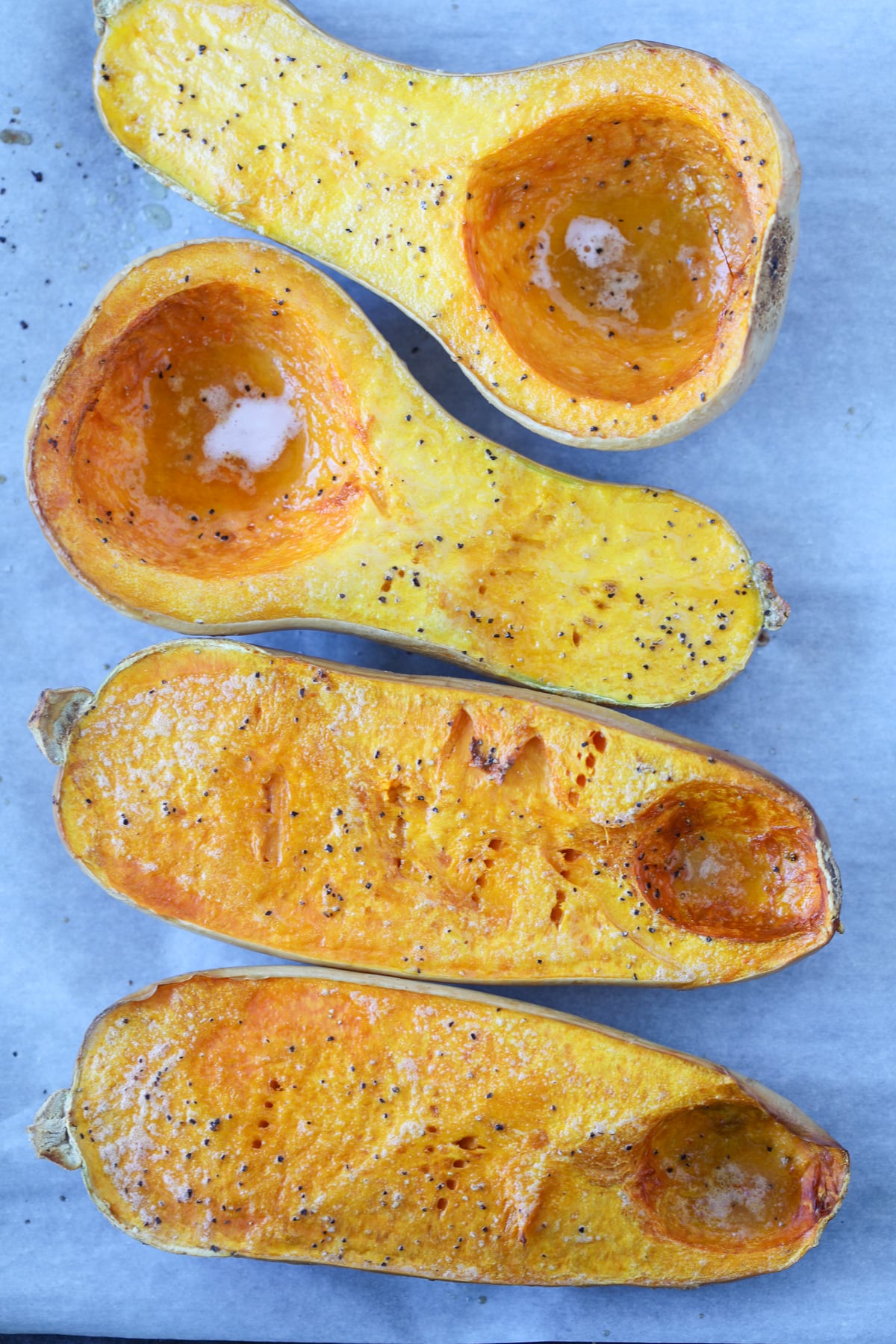
Bake for about 1 hour, or until the squash is very tender when pierced with a fork.
I let it cook until the flesh is noticeably soft rather than stopping as soon as a fork goes through it. That makes a big difference when it comes time to mash.
Smaller squash may cook faster, so start checking about 15 minutes early.
Step 3: Scoop and mash
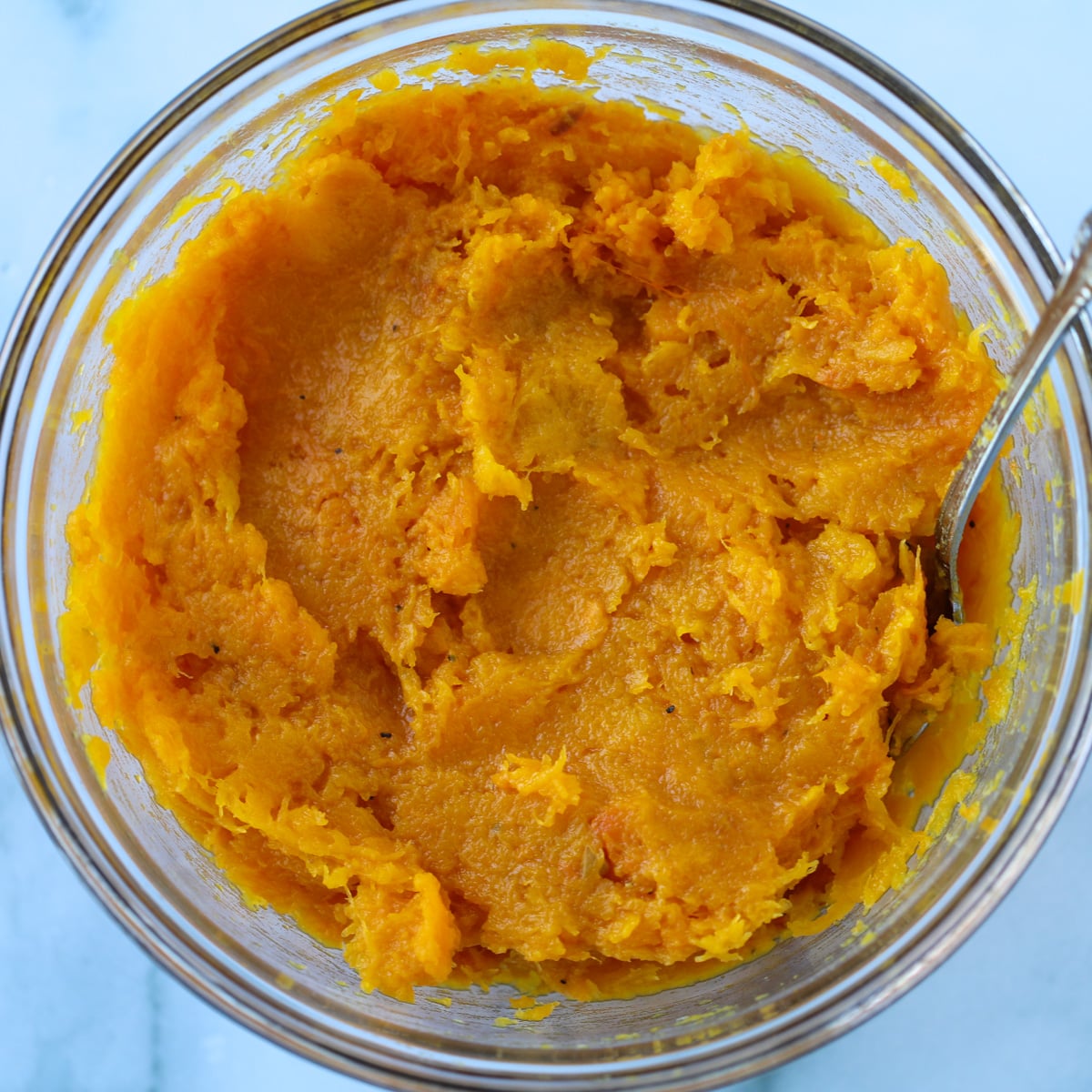
Scoop the soft squash flesh into a large mixing bowl.
Mash with a potato masher for a more rustic texture, or use a hand mixer for a smoother consistency.
Step 4: Finish the mash
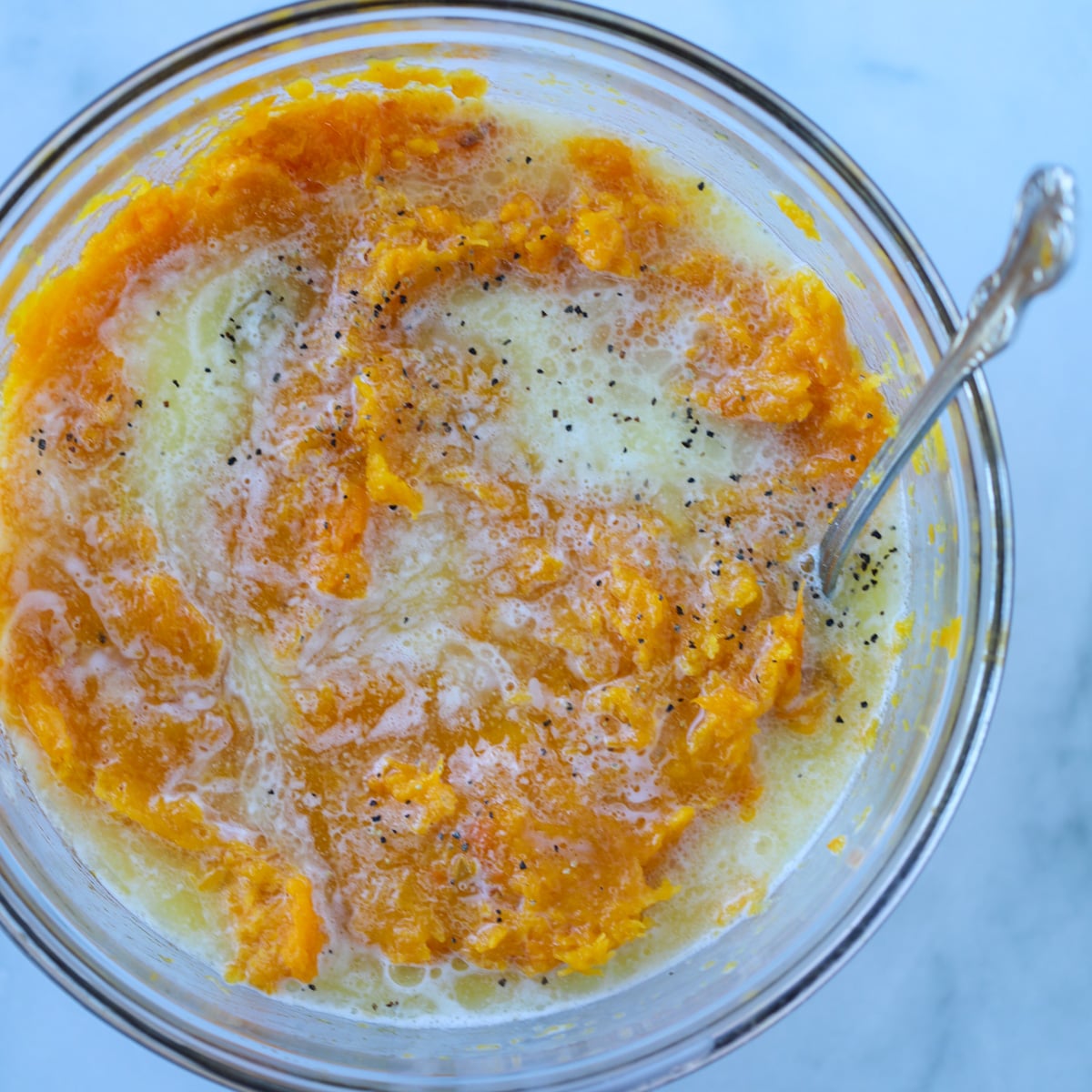
Mix in the almond milk and remaining melted butter.
Season with additional salt and pepper to taste. Add a little more milk if you prefer a softer consistency.
Garnish with chopped chives or fresh herbs if desired and serve warm.

Recipe Tips
- Cook the squash until very soft. Undercooked squash is difficult to mash and won't give you the same creamy texture.
- Adjust the cooking time for the squash size. A smaller squash may be ready about 15 minutes sooner than a large one.
- Roast it cut side up. For mashed squash, you want soft, moist flesh rather than a heavily browned surface.
- Add the milk gradually. It's easy to thin the mash, but you can't remove liquid once it's added.
- Use a hand mixer for smooth squash. A potato masher is better if you prefer a little more texture.
- Microwave the whole squash for 2-3 minutes before cutting if needed. This can slightly soften the exterior and make a hard squash easier to slice.
Substitutions and Variations
- Make it dairy-free: Replace the butter with olive oil or a plant-based butter.
- Change the milk: Unsweetened almond milk keeps the recipe light, but regular milk or another unsweetened milk can also work. Heavy cream will make the mash richer.
- Make it sweeter: Add cinnamon and a small amount of maple syrup, honey, or your preferred sweetener.
- Add savory herbs: Sage, thyme, rosemary, or chives pair especially well with butternut squash.
- Try another winter squash: Acorn, carnival, kabocha, or delicata squash can be mashed using a similar method, although the flavor and moisture level will vary.
What to Serve with Mashed Butternut Squash
Mashed butternut squash pairs especially well with roasted turkey, chicken, pork chops, or pork tenderloin. Its slightly sweet, savory flavor makes it a natural alternative to mashed potatoes for fall dinners and holiday meals.
Meal Prep and Storage
- Store mashed butternut squash in an airtight container in the refrigerator for up to 4-5 days.
- Reheat individual portions in the microwave or warm a larger batch gently on the stovetop. Stir in a small splash of milk if the squash has thickened after refrigeration.
- You can roast and mash the squash a day or two before a holiday meal, then refrigerate it until you're ready to reheat and serve.
- Mashed butternut squash can also be frozen, although the texture may be slightly softer after thawing. Freeze it in an airtight freezer-safe container and thaw overnight in the refrigerator before reheating.
Macros
Per ½-cup serving, this mashed butternut squash has approximately:
- Calories: 155
- Protein: 2g
- Total carbs: 19g
- Fiber: 6g
- Net carbs: 13g
- Fat: 9g
Butternut squash contains more carbohydrates than many of the other vegetables in our low carb sides collection, so portion size matters if you're closely tracking carbs.
FAQs
Is butternut squash low carb?
Butternut squash is moderate in carbohydrates rather than extremely low carb. This recipe has about 13g net carbs per ½-cup serving, so it can fit some lower-carb eating patterns depending on portion size and your overall carbohydrate target.
Can I make mashed butternut squash more keto-friendly?
Yes. To lower the carbs, replace about half of the cooked butternut squash with cooked cauliflower before mashing. The cauliflower lightens the carb count while keeping the texture creamy, although the finished mash will taste less sweet and more savory.
I'd use cooked cauliflower that has been drained well so you don't make the mash watery.
What does mashed butternut squash taste like?
Mashed butternut squash has a mildly sweet, nutty flavor and a soft, creamy texture. Butter, salt, and pepper make it savory, while cinnamon or maple syrup can emphasize its sweeter side.
How do you make butternut squash mash smooth?
Cook the squash until very soft, then use a hand mixer or food processor for the smoothest texture. Add the milk gradually so the mash stays creamy rather than becoming watery.
Easy Low Carb Vegetables
Looking for more low carb vegetable side dish ideas?
- Low carb broccoli fritters
- Easy baked green beans
- Brussel sprouts casserole (keto)
- Air fryer bacon green bean bundles
- Low carb cauliflower mac and cheese
- Slow cooker cabbage and bacon
- Cauliflower keto mashed potatoes
- Green bean casserole with cream cheese
- Creamed spinach (with fresh spinach)
- Keto cauliflower casserole with bacon
- Low carb radishes
Recipe
Low Carb Butternut Squash (Pureed & Savory)
Ingredients
- 4 lb butternut squash
- ½ cup butter divided
- ¼ cup almond milk
- salt and pepper to taste
Instructions
- Preheat the oven to 350 F.
- Wash the butternut squash, cut it lengthwise, and with a spoon remove the seeds and membrane.
- Place the squash halves cut side up on a rimmed baking sheet. Brush the squash with melted butter or olive oil and sprinkle with salt and pepper.
- Bake for 1 hour or until the squash is very tender when pierced with a fork.
- Scoop out the softened squash and add it to a large mixing bowl.
- With an electric mixer, hand mixer, or potato masher, mix the butternut squash until it's smooth.
- Add in the milk or cream, plus the rest of the melted butter. Add more salt and pepper to taste. Sprinkle with cinnamon if desired. Garnish with chopped chives or other fresh herbs. Enjoy!
Notes
Nutrition



Leave a Reply